18-03-2026
News
The call for applications has been closed. Thank you for participating.

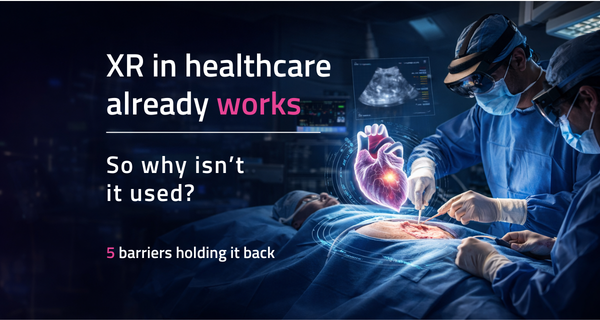
Extended reality is no longer a promise in healthcare. It already works. It supports surgeons, trains medical staff and enables new forms of therapy. And yet, most of these solutions never make it into everyday clinical practice. The question is no longer whether XR works. The real question is why it still struggles to enter the system.
Across Europe, XR solutions for healthcare are becoming increasingly sophisticated. They are tested, refined and often perform exactly as intended in controlled environments. From the outside, it looks as though the hardest part has already been solved. This is where the real challenge begins.
Because the moment a solution moves beyond testing and attempts to enter the healthcare system, it encounters something far more complex than technology: regulation, clinical practice, institutional structures and market dynamics. And this is where progress begins to slow.
The first VR Health Champions Open Call 2025 was not designed to showcase innovation.It was designed to test what happens when innovation meets reality. Four collaborations were established, each addressing a specific challenge: regulation, clinical validation, product development and market entry. Over several months, these teams worked closely with flagship innovators – not in theory, but in practice.
What emerged from that process was not a single obstacle, but a pattern. Each collaboration exposed a different layer of friction. In some cases, the challenge was regulatory.
For Virtuleap, working with Critical Catalyst proved decisive in shaping the pathway towards certification.
“Support from Critical Catalyst was crucial in preparing our CE certification documentation and shaping key regulatory decisions. It has brought Cogniclear VR significantly closer to market.” – Virtuleap
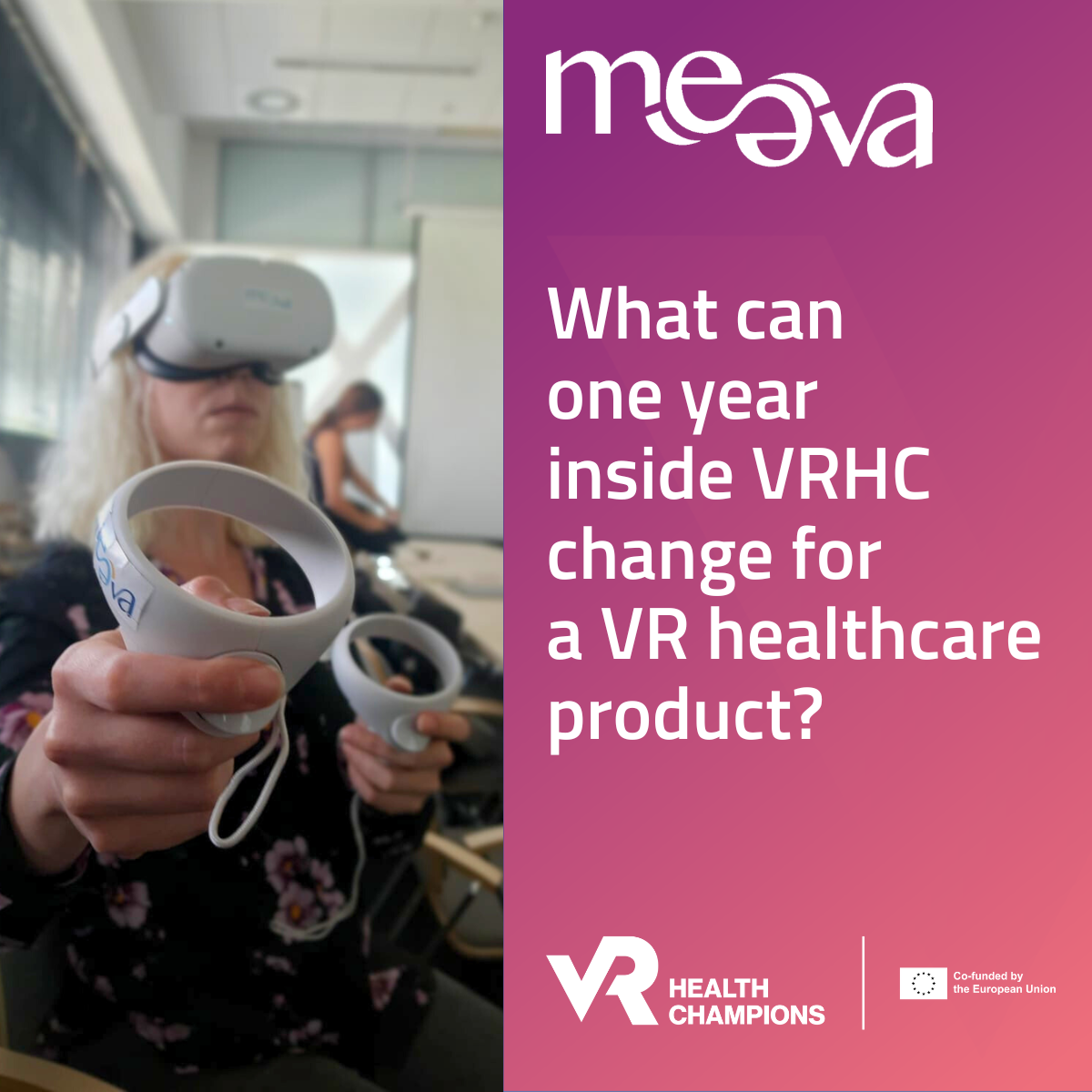
In others, the challenge lay in product development – not in building something new, but in making it viable. For MEEVA, collaboration with Inova+ translated strategic ideas into concrete product development, grounded in real user needs and aligned with clinical and regulatory requirements.
“Inova+ helped us translate strategy into concrete product development. We are now designing an AI-based system with intelligent agents aligned with real user needs, while meeting clinical and regulatory requirements.”– MEEVA
There were also lessons at the level of validation. For MedApp, collaboration with SIMHUB collaboration introduced a level of scrutiny that reshaped key decisions.
“The collaboration brought an external perspective that pushed us on performance, usability and scalability. It helped validate key decisions and better prepare the solution for real clinical use.” – MedApp
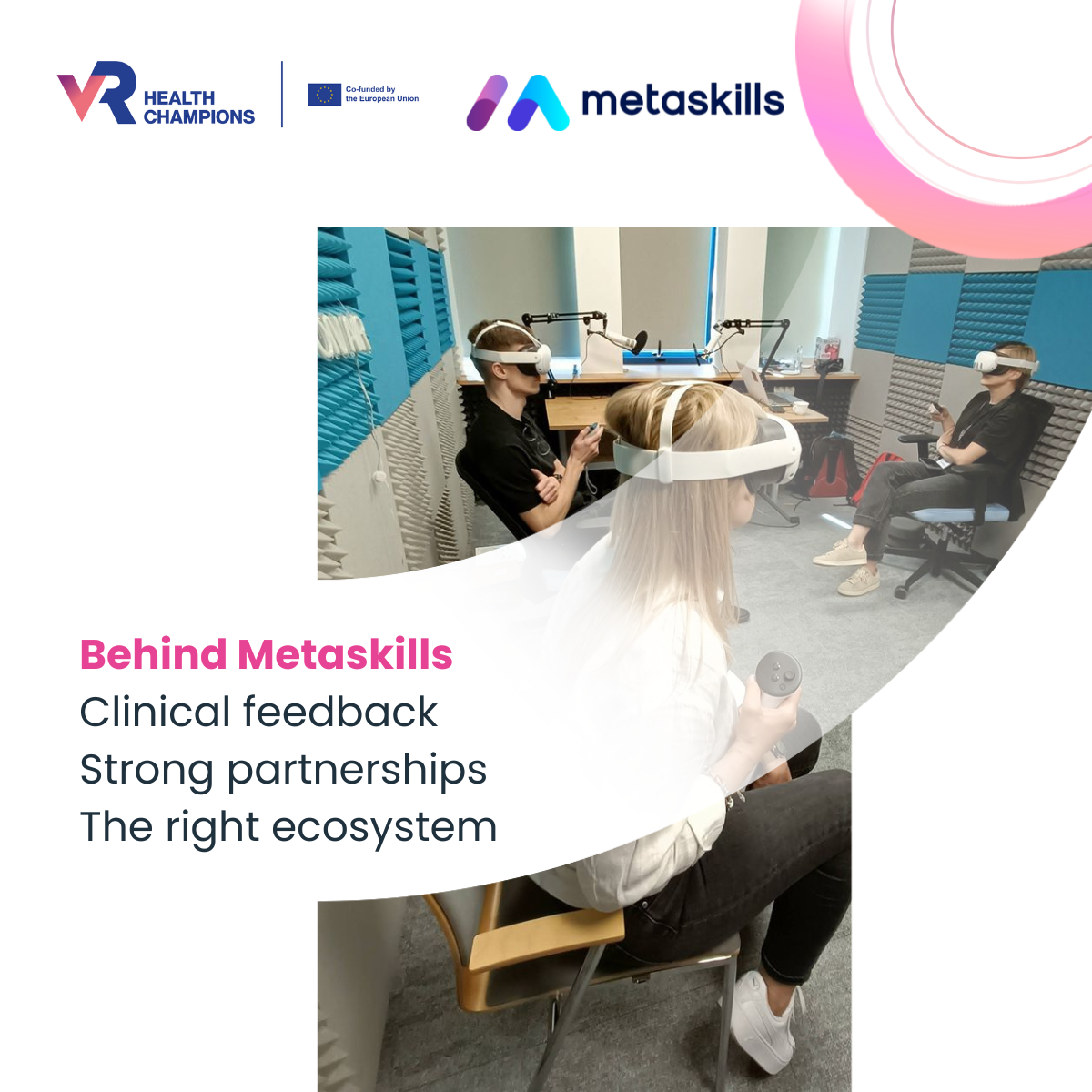
And finally, there was the challenge of entering the market itself. MetaSkills’ experience showed just how contextual that process is.
“Collaboration with MetaMedicsVR helped us understand what truly matters when entering a healthcare market – from language and cultural context to the expectations of medical professionals. These insights now guide how we approach other markets.” – MetaSkills
Taken together, these experiences point to a clear conclusion: there is no single barrier to XR in healthcare.
What the first VR health Champions Open Call 2025 made visible is not complexity for its own sake, but structure. XR does not struggle because of one missing element. It struggles because several conditions need to be met simultaneously.
The first is adoption. Even a well-developed solution does not automatically find its place within healthcare systems. Each market operates differently, each institution follows its own processes, and even small differences in language or expectations can determine whether a solution is accepted or rejected.
The second is regulation. Without meeting strict requirements related to safety, data protection and certification, a product simply cannot exist within the system. These are not final steps; they shape the product from the outset.
The third is clinical validation. Healthcare systems do not adopt solutions because they are promising, but because they are proven. Evidence, usability and real-world performance are essential – and generating them is both complex and time-consuming.
The fourth is technological maturity. XR solutions may work in controlled settings, but that does not mean they are ready to scale. Integration, stability and compatibility with existing systems remain ongoing challenges.
And finally, there is the question of use. Not every application of XR is meaningful. The most successful solutions are those that fit naturally into existing workflows and address clearly defined problems. If any one of these elements is missing, progress slows. If several are missing, it stops altogether.
The second VR Health Champions Open Call 2026 begins exactly where the first one left off. Not with new ideas, but with identified gaps.
“What the first phase made clear is that XR doesn’t fail because of a lack of innovation. It fails when the system around it isn’t ready. With the VR Health Champions Open Call 2026, we are not looking for more ideas – we are addressing the specific gaps that prevent these solutions from reaching real healthcare environments.” – Cristiana Costa, Project Coordinator.
Fourteen challenges were defined, each targeting a specific part of the system: from market entry and adoption, through regulatory compliance and cybersecurity, to clinical investigation, data processing and advanced technological development.
For each of these challenges, one SME was selected.
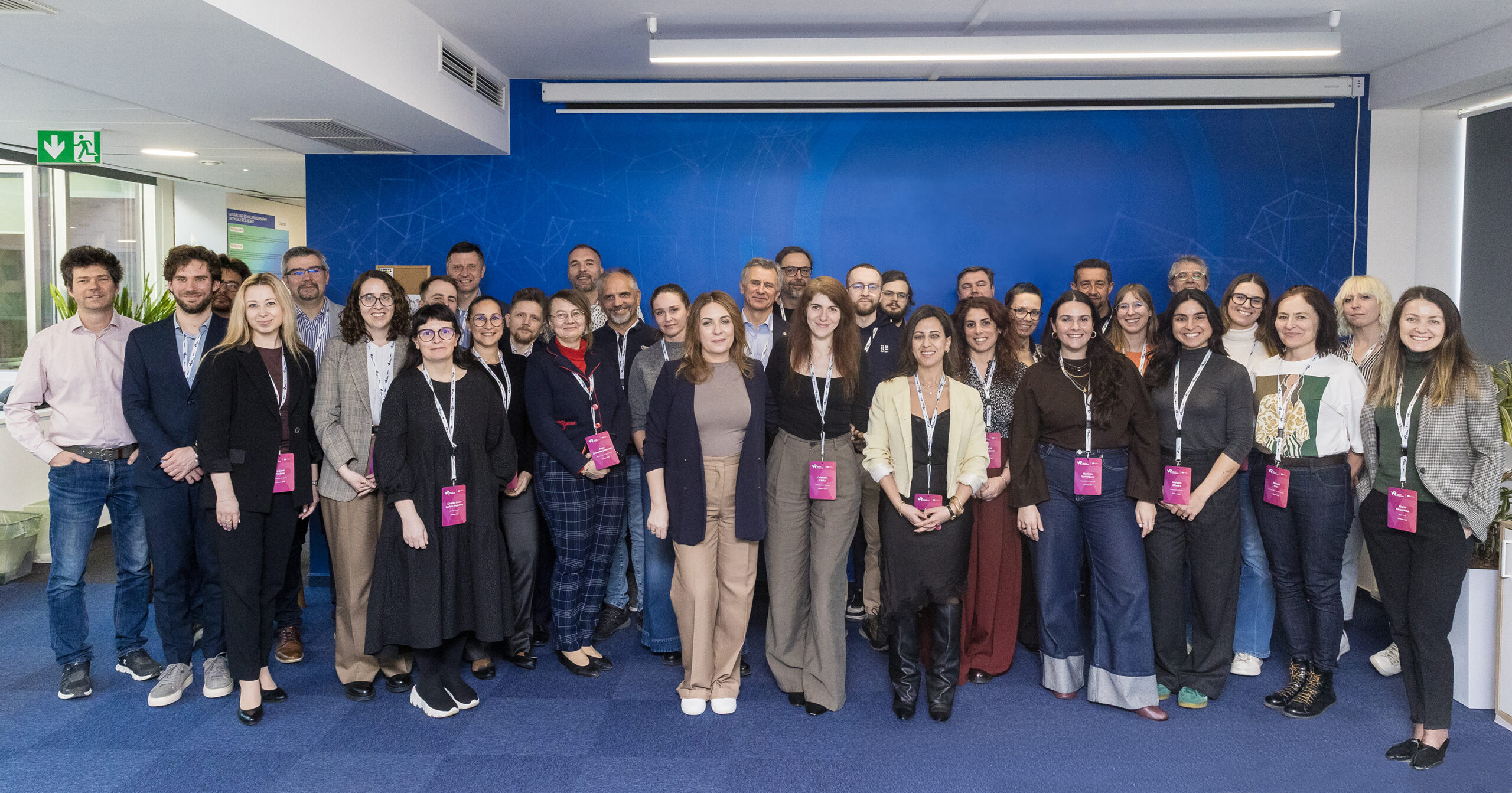
ADEOLAB, CANARY TECHNOLOGY INNOVATIONS, Chino.io, DOTSOFT SA, Dual Up Consulting Group, Hg blu, Human Opsis, LOCUTUS INTEGRATOR, Medical Simulation Technologies, MetaMedicsVR, Picaresque, ReForms21, Visionage and Innovativa are now part of this next phase.
They are not building standalone solutions but strengthening the parts of the system that have, until now, slowed everything else down.
From the outside, this may look like another digital health initiative. It is something more fundamental. It is an attempt to align elements that rarely move together: technology, regulation, clinical practice and market dynamics. If the first VR health Champions Open Call 2025 demonstrated where the system breaks, the second one is an attempt to see whether it can be made to work as a whole.
The next phase will be defined less by announcements and more by progress. Over the coming months, these collaborations will test whether aligning these elements changes the outcome – whether solutions can move not only forward, but through the system. Because at this stage, the question is no longer whether XR has potential. It is whether the system is finally ready to let it in.