18-03-2026
News
The call for applications has been closed. Thank you for participating.


When cutting-edge technology meets human vision, the result can be either frustration or revolution. At the University of Latvia, researchers from the Department of Optometry and Vision Science are ensuring the latter. As a key partner in the VR Health Champions project, they’re helping to redefine how XR can truly serve healthcare by putting people’s eyes at the centre of innovation.

In this exclusive conversation with Tatjana Pladere, Head of the Department of Optometry and Vision Science at the University of Latvia, we explore how human vision meets immersive technology in one of Europe’s most forward-thinking XR healthcare collaborations.
In a world where extended reality (XR) is rapidly becoming a staple across industries, one critical factor often gets overlooked—human vision. This gap was a call to action for the Department of Optometry and Vision Science at the University of Latvia (LU).
“Our work in XR healthcare began as a natural progression during the rapid advancement of XR technologies,” explains Tatjana Pladere, Head of the Department. “It became clear that individual differences in visual system functioning were not being sufficiently considered. That’s when we decided to step in.”
While users can avoid discomfort in entertainment settings by removing the headset, healthcare professionals and trainees do not have that luxury. That’s why LU’s mission is to ensure that XR solutions are practical, inclusive, and safe for all users.
As vision scientists and eye care professionals, LU’s role in the project is laser-focused: ensuring that XR applications do not compromise visual health and respect individual differences.
“We wanted to contribute our knowledge and expertise to developing meaningful healthcare innovations in collaboration with industry,” says Pladere. “At the same time, joining an international consortium was a chance to learn from others and be part of something bigger.”
What drives this team is not just science – it’s impact. Their background in visual system functionality and experience in developing human-centred assessment methods allow them to influence XR design in a way few others can.
“This supports the development of more inclusive XR technologies,” she adds. “And it’s only possible because of the strong interdisciplinary collaboration in the project.”
LU brings a nuanced understanding of how human vision interacts with XR headsets;
a factor often underestimated in tech development. They also contribute advanced methodologies to assess user experience and detect individual variability in how people react to immersive technologies. Their goal? To enable the creation of XR solutions that are not only functional but tailored to fundamental human needs.
“It’s thrilling to imagine a time when these solutions will become the new standard,” says Pladere. “When they will be so seamlessly integrated into healthcare that we’ll barely remember how things worked without them.”
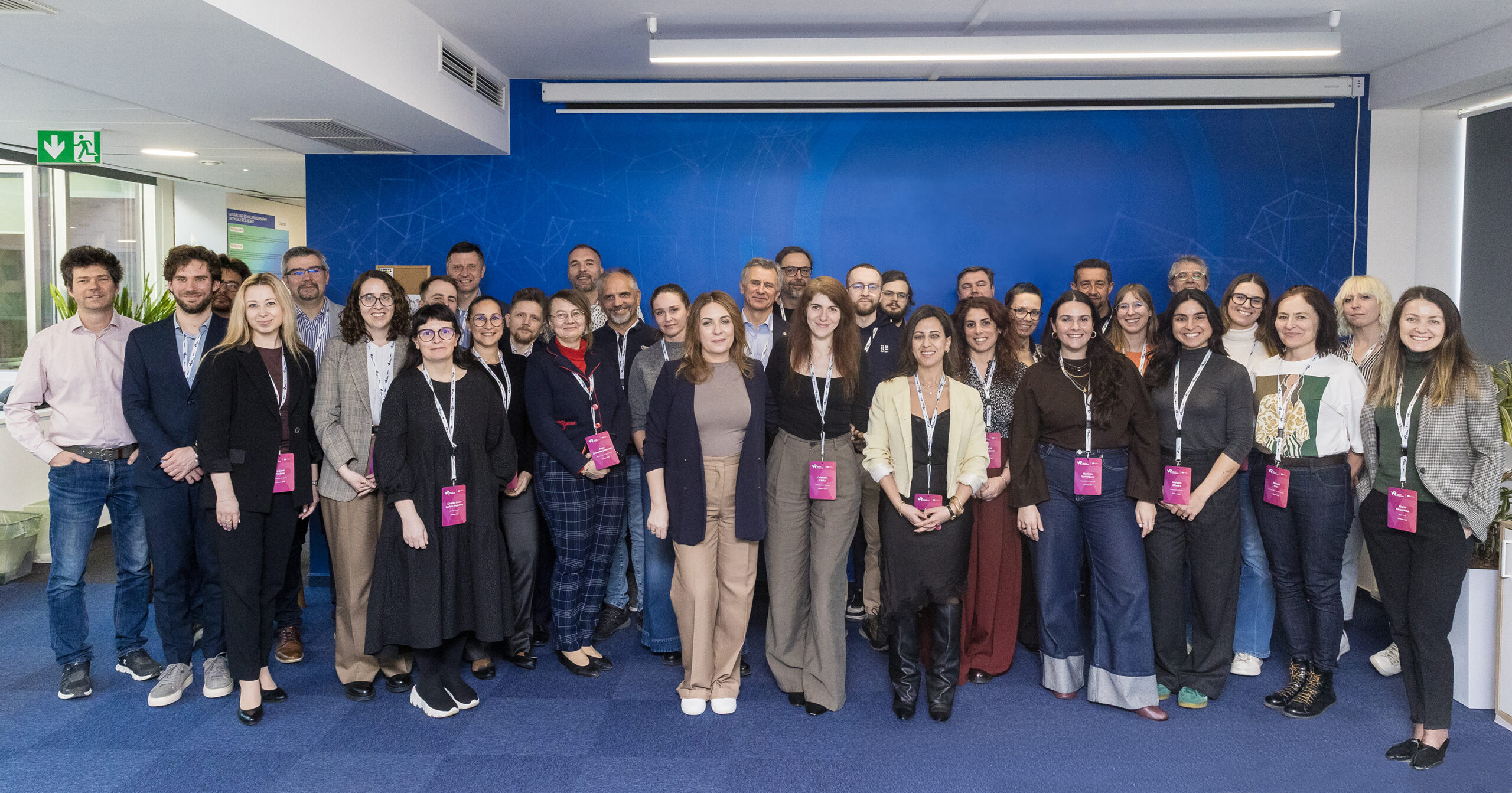
The project’s strength lies in its collaborative DNA. For LU, one of the biggest surprises has been how quickly trust and camaraderie developed among partners across Europe.
“Although most of us were meeting for the first time, after our initial on-site gathering, it felt as though we had already been working together for years,” Pladere recalls. “It’s inspiring to work with people who are ready to experiment, propose bold ideas, and push the boundaries of what’s possible.”
This enthusiasm is contagious and necessary. The consortium’s diversity, with SMEs developing cutting-edge solutions and service providers supporting them with tailored expertise, is key to creating innovations that work across different healthcare systems and regions.
LU is particularly proud of the way the consortium’s shared direction has taken shape—bringing projects from concept to the edge of market readiness. And they believe that the real revolution is just beginning.
“Ultimately, the project’s five upgraded solutions aim to deliver tangible benefits to the population and make a lasting difference in healthcare,” says Pladere. “That’s why we do this.”
At its core, the University of Latvia’s contribution is a powerful reminder that innovation must see clearly to lead effectively. When it comes to shaping the future of XR in healthcare, their vision is crystal clear.