27-05-2026
News
The call for applications has been closed. Thank you for participating.

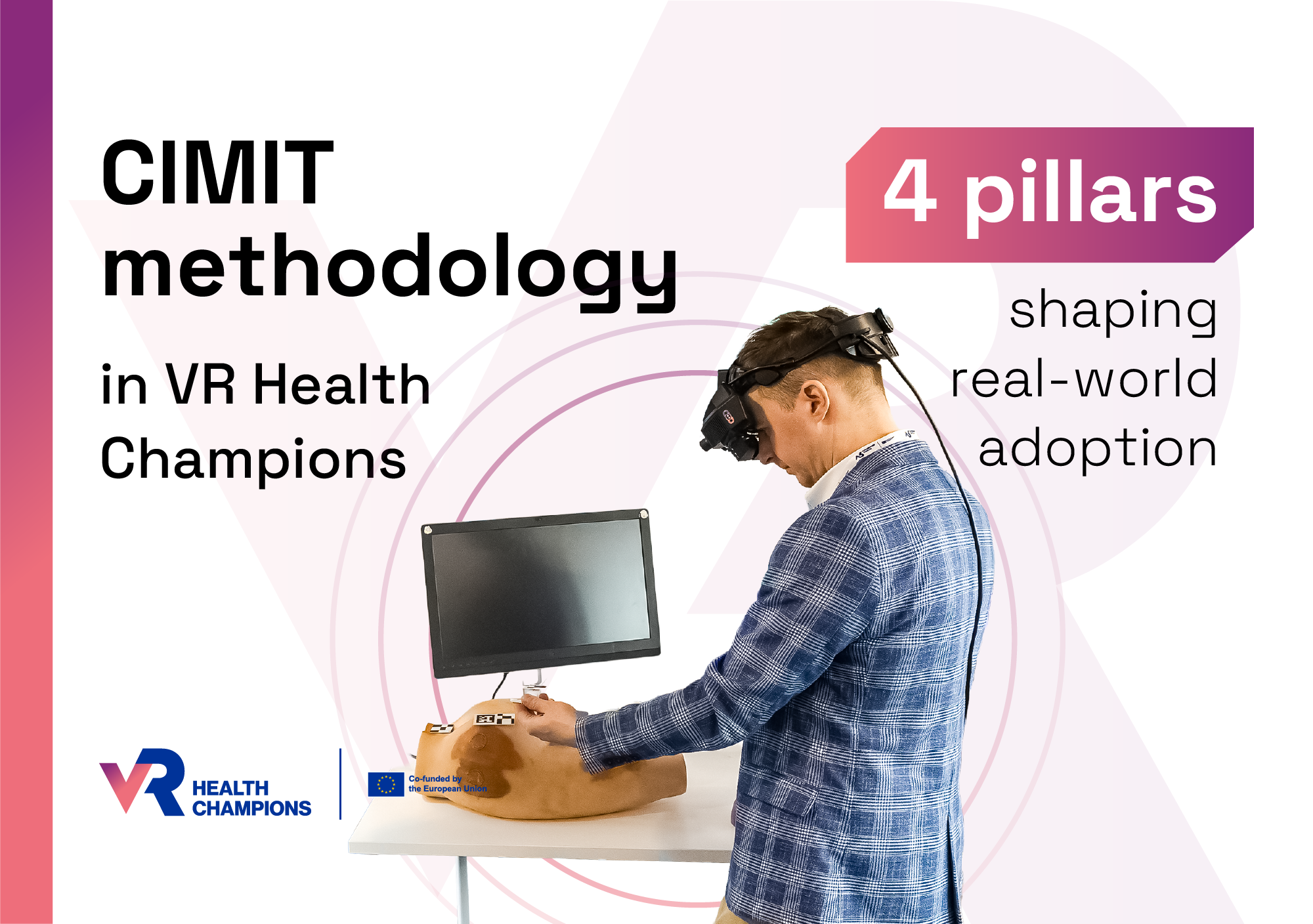
Strong technology is not enough to succeed in healthcare. What matters is whether it can navigate regulatory pathways, fit clinical practice, and find its place in the market. In VR Health Champions (VRHC), the CIMIT methodology helps turn promising XR solutions into innovations ready for real-world use.
Across Europe, many digital health solutions reach an advanced stage of development but struggle to move beyond pilots. The gap is rarely technical. More often, it sits between validation and adoption.
The VR Health Champions project addresses this gap by supporting XR-based healthcare innovations developed by SMEs and helping them progress towards market readiness and implementation. The project focuses on increasing the maturity of these solutions and reducing barriers that limit their uptake in real healthcare systems. To do this in a structured way, the project applies the CIMIT HealthTech Innovation Cycle methodology.
Rather than focusing solely on technology, the CIMIT approach looks at innovation as a system. Each solution is assessed across four key domains: Technology, Regulatory, Business and market, and Clinical. These dimensions reflect the real conditions that determine whether a solution can move forward.
This perspective changes how progress is measured. A solution is not considered “ready” because it works technically, but because it can operate within healthcare environments, meet regulatory requirements, and respond to actual market needs.
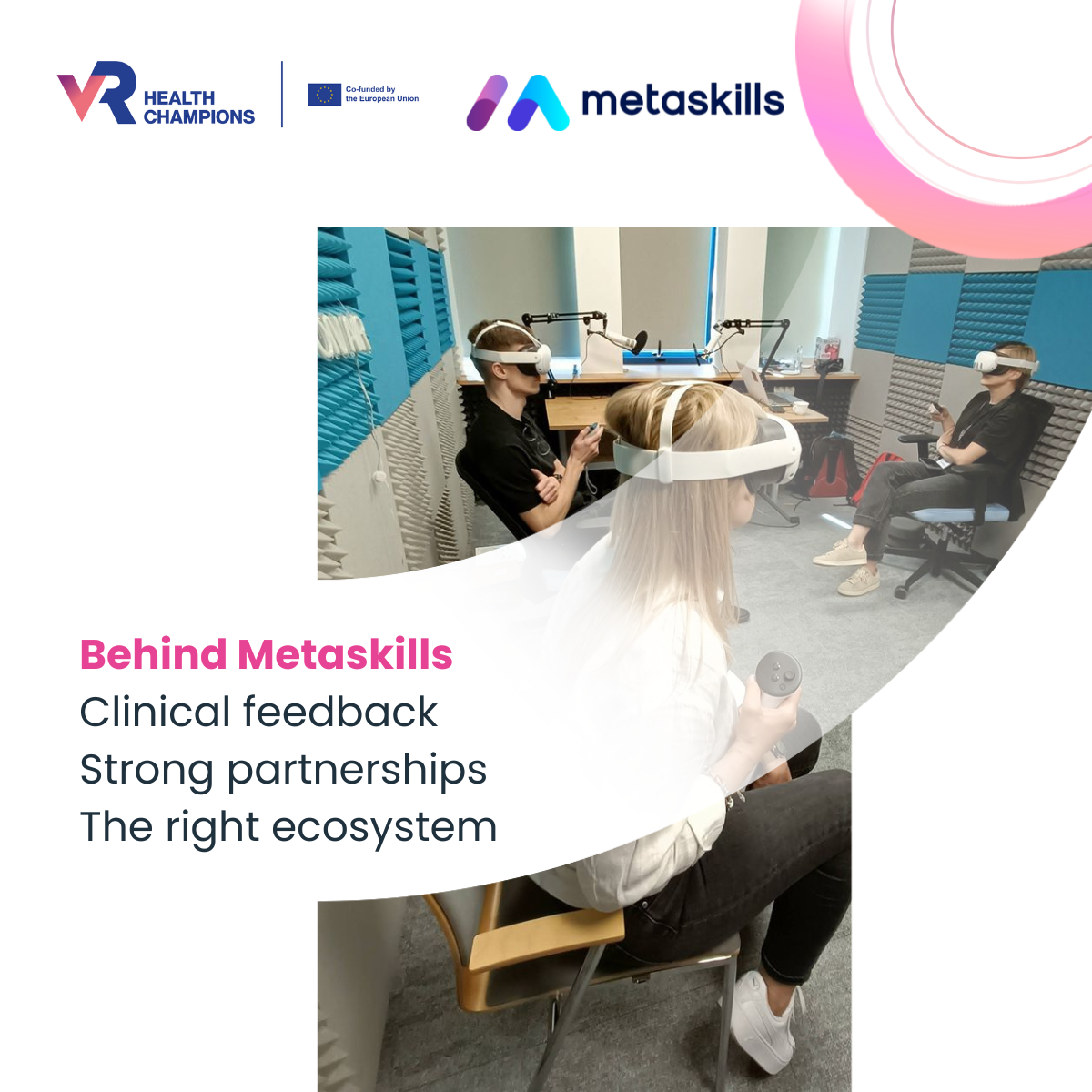
Within VR Health Champions, this methodology is used to monitor the progress of VRHC flagship SMEs: dotLumen, MEEVA, Metaskills and MedApp, and identify risks at an early stage. It provides a clear framework for understanding where each solution stands and what needs to be addressed next. This includes not only technical refinement, but also clinical validation, regulatory strategy, and business positioning.
What is central in this process is the role of the entire consortium. All partners are actively involved in applying the methodology, contributing their expertise through specific work packages. Whether in technology development, clinical validation, regulatory guidance or market support, each project partner plays a defined role, within selected work packages and related tasks, in advancing the solutions across the four domains.
This coordinated approach reflects how innovation actually happens in healthcare. Progress depends on collaboration between different actors, not isolated efforts. The work packages are designed to mirror this structure, ensuring that each aspect of development is addressed in parallel and in alignment with the others.
The benefit is practical. By systematically addressing barriers beyond technology, the project helps de-risk innovation and supports a more efficient path towards adoption. It also improves the quality of monitoring and reporting, allowing for better-informed decisions at each stage.
The goal is clear: to move XR solutions from promising prototypes to technologies that can be implemented, scaled and integrated into healthcare systems.
This is not about generating more innovation. It is about making innovation work in practice.
Project perspective
Cristiana Costa, Project Leader at Instituto Pedro Nunes (IPN), highlights the importance of this approach:
“The challenge is not building new solutions, but ensuring they can be adopted in real settings. By applying the CIMIT methodology, we are able to look at each innovation in a structured way and address the barriers that often remain invisible at early stages. This allows us to support SMEs more effectively and bring their solutions closer to real-world use.”